
Time a known meter volume, scale it to m3/h, apply calorific value and compare heat input with the appliance rating.
Gas rating is one of the best ACS revision calculations because the method is simple but the units catch people out. The aim is to work out how much gas the appliance is using and whether the heat input is close to the rating on the data plate.
The formula
Gas rate in m3/h = (volume in m3 / time in seconds) x 3600. Heat input in kW = gas rate x calorific value / 3.6. Natural-gas calorific value varies, so use the current declared value where accuracy matters; 39.5 MJ/m3 is a common revision default.
One unit trap sits right at the end: a declared calorific value like 39.5 MJ/m3 is a gross figure, so this method gives gross heat input. Many modern appliance data plates quote net heat input (for natural gas, net is roughly gross divided by 1.1). Check which basis the data plate uses before calling a reading high or low.
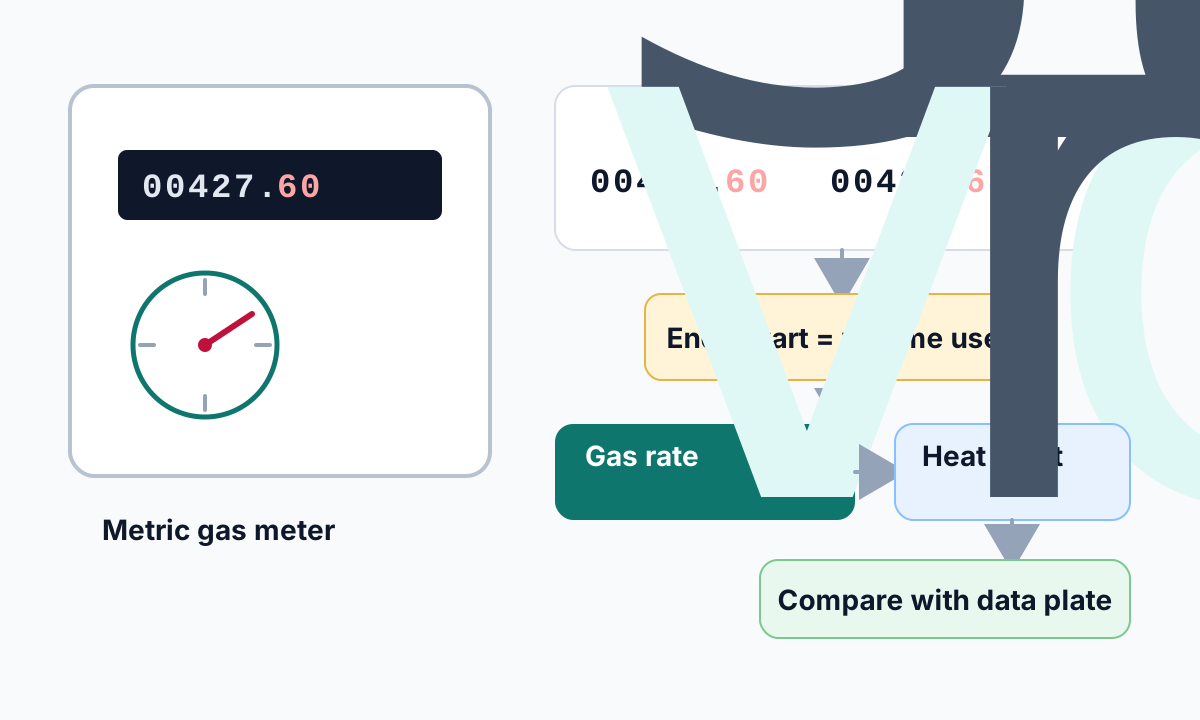
Step-by-step method
- Check scope and safety first. Do not treat a revision calculation as permission to work on gas; live testing belongs to competent registered engineers using the appliance instructions.
- Turn off the other gas appliances so the meter records only the appliance being checked. Run it at the specified test rate and let it settle. Note the meter unit: cubic metres for metric, cubic feet for imperial.
- Record the start reading, then time a known volume or a clear movement on the test dial.
- Convert the measured volume to cubic metres if needed. One cubic foot is about 0.0283 cubic metres.
- Calculate gas rate in cubic metres per hour: volume in cubic metres divided by seconds, multiplied by 3600.
- Calculate heat input in kW: gas rate multiplied by calorific value in MJ/m3, divided by 3.6.
- Compare the result with the appliance data plate and manufacturer tolerance before deciding what the reading means.
Metric meter example
A boiler passes 0.01 m3 in 16.4 seconds with CV 39.5 MJ/m3. Gas rate = (0.01 / 16.4) x 3600 = 2.20 m3/h. Heat input = 2.20 x 39.5 / 3.6 = about 24.1 kW gross.
Open these figures in the gas-rate calculator to change the readings, compare gross and net heat input, or print the revision chart.
Use the ACS gas-rate exercise to explain what else you need to know before accepting that result.
Imperial meter worked example
Suppose a test dial measures 1 cubic foot in 45 seconds. One cubic foot is 0.0283168 m3, so gas rate = (0.0283168 / 45) x 3600 = 2.265 m3/h. With a gross CV of 39.5 MJ/m3, heat input = 2.265 x 39.5 / 3.6 = about 24.9 kW gross.
Read the dial volume before timing it: a full turn is not automatically 1 cubic foot. The billing register on an imperial meter can count hundreds of cubic feet; that is different from the volume marked on a test dial. Open this imperial example in the calculator, then change the timed volume or time to see how the result changes.
What gas rate should a 30 kW boiler have?
If 30 kW is the gross heat input, a revision CV of 39.5 MJ/m3 gives 30 x 3.6 / 39.5 = 2.734 m3/h. At that steady rate, 0.01 m3 takes about 13.2 seconds. These are calculated example values, not a pass limit for every boiler labelled 30 kW.
The model name may describe heat output, while the data plate lists heat input on a gross or net basis. A combi can also have different heating and hot-water ratings. Use the input and operating mode specified for the test before comparing a measured gas rate.
Using a smart-meter reading
Use the cumulative gas-volume register in m3, rather than a cost display or daily energy total. Subtract the start reading from the end reading and time the interval. For example, a rise of 0.080 m3 over 120 seconds gives (0.080 / 120) x 3600 = 2.40 m3/h.
The display must give enough resolution and update often enough for the approved test method. Follow the meter and appliance instructions; a display that has not updated does not establish that no gas has passed.
Gas rating a cooker or hob
The legal check is the same for a cooker as for a boiler. After work on any gas appliance, regulation 26(9) of the Gas Safety (Installation and Use) Regulations 1998 requires its operating pressure or heat input, or both where necessary, to be examined, and its combustion performance where neither is reasonably practicable. HSE’s guidance says the engineer should carry out the most appropriate test for the appliance, using the manufacturer’s instructions or the data badge.
For cookers and hobs that is often an operating-pressure check rather than a meter test. Rangemaster’s instructions measure the pressure at a hotplate burner injector, not the wok burner: lift off the burner head, fit the gauge to the injector, light another hotplate burner, then turn on the tested burner and compare the reading with the data badge. Stoves’ 60 cm gas cooker instructions use the oven injector. Gas Safe Register’s Technical Bulletin 161 gives an injector method for cookers where the maker gives none, or where no gas meter is fitted, for example on LPG.
The figure to compare with is on the data badge or in the instructions for that model. Rangemaster lists 20 mbar for natural gas and 29 mbar (butane) or 37 mbar (propane) for LPG; Stoves’ Richmond instructions give 30 mbar for LPG at the appliance test point.
Where a meter test is used, turn off every other gas appliance and set the cooker up as its instructions describe. The meter measures every burner that is alight, so compare the result with the combined rating of those burners, on the same gross or net basis. Rangemaster states that its burner ratings are based on gross calorific value, the same basis as a gas rate worked out with a declared calorific value such as 39.5 MJ/m3.
What the result does not prove
A matching heat input does not prove the appliance is safe by itself. Combustion performance, flueing, ventilation, operating pressure, manufacturer instructions and unsafe-situations judgement still matter. Gas rate is one useful check inside a wider commissioning or servicing process.
Keep the test conditions clear. When timing one appliance at the meter, the other appliances are off. A separate installation working-pressure check considers simultaneous demand, with the connected appliances running at their required maximum rates. Record which test you performed and the load present; the two readings answer different questions.
Common gas-rating mistakes
- Mixing units in one line — cubic feet, cubic metres and seconds have to be reconciled before the formula, not halfway through it.
- Comparing a gross calculated input against a net data-plate figure, or the reverse; for natural gas, net is roughly gross divided by 1.1, so a "10% low" reading is often just the wrong basis.
- Timing too small a movement, so a fraction of a second of timing error becomes a large error in the rate — time a clear, measured volume.
- Starting the clock before the appliance has settled at the rate you are testing.
- Calling a reading "high" or "low" without checking the manufacturer tolerance, when it is actually within spec.
Quick answers
What is the gas-rate formula?
Gas rate in m3/h is volume in cubic metres divided by time in seconds, multiplied by 3600. Heat input in kW is gas rate times calorific value, divided by 3.6.
Can I gas rate from an imperial meter?
Yes for the calculation, but convert cubic feet to cubic metres before calculating heat input. Live gas work still needs the correct competence and appliance instructions.
Why is the gas-rate formula divided by 3.6?
Gas rate in m3/h multiplied by calorific value in MJ/m3 gives MJ per hour. One kWh equals 3.6 MJ, so dividing by 3.6 converts that energy rate to kW. The result is heat input, not the useful heat output of the boiler.
What gas-rate tolerance should I use?
Use the tolerance and test conditions specified for the appliance. A generic percentage is not a substitute for its instructions. First check the operating mode, timed volume, calorific value and gross or net basis; a mismatch there can make a correct measurement look wrong.
Does a 30 kW boiler always use 2.73 m3 of gas per hour?
No. About 2.73 m3/h follows only when the gross heat input is 30 kW and gross calorific value is 39.5 MJ/m3. Output ratings, net input figures, modulation and different calorific values change the comparison.
What calorific value should I use?
For revision, 39.5 MJ/m3 is commonly used for natural gas examples. For real work, use the current declared or supplied calorific value for the situation.
Is the calculated heat input gross or net?
Gross, when you use a declared calorific value such as 39.5 MJ/m3. Many appliance data plates quote net input; for natural gas, net is roughly gross divided by 1.1, so check which basis you are comparing against.
How do you gas rate a cooker?
Check what the cooker’s instructions specify. The law requires its operating pressure or heat input to be examined after work on it, and several cooker makers specify a pressure check at a burner injector. If you use the meter instead, turn off every other gas appliance and compare the result with the combined rating of the burners that were alight, on the same gross or net basis.
Where is the pressure test point on a gas cooker?
It depends on the model. Rangemaster’s instructions use one of the hotplate burner injectors (not the wok burner), and Stoves’ 60 cm gas cooker instructions use the oven injector. Compare the reading with the pressure on the data badge or in the instructions.
Is a gas rate one minute or two?
On a metric meter, either. Gas Safe Register’s Technical Bulletin 162 (2023) says a one-minute test is accurate and acceptable, and that keeping to the two-minute test is the engineer’s choice. Use the actual number of seconds timed in the formula. On an imperial meter the method is unchanged: time one complete revolution of the test dial.